
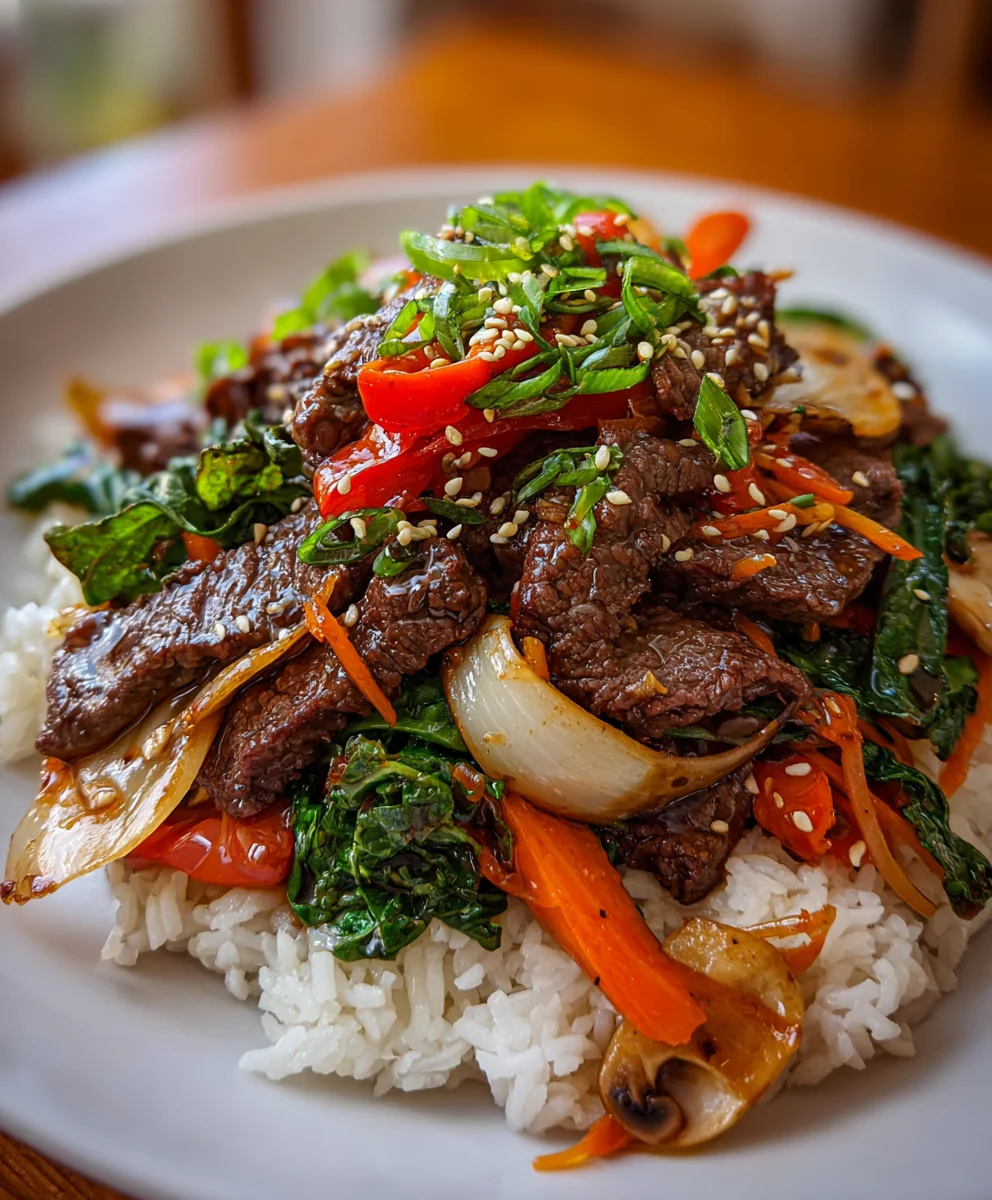
Introduction to Korean Beef Bulgogi
Hey there, fellow home cooks! Today, I’m thrilled to share a recipe that has stolen my heart: Korean Beef Bulgogi. Picture this: tender slices of beef marinated in a savory blend of flavors, grilled to perfection, and served with vibrant vegetables. It’s not just delicious; it’s a quick solution for those hectic days when you want to impress your family without spending hours in the kitchen. Trust me, once you try this dish, it will become your go-to for family dinners or cozy gatherings with friends!
Why You’ll Love This Korean Beef Bulgogi
What’s not to love about Korean Beef Bulgogi? It’s quick, easy, and bursting with flavor! You can whip it up in no time, making it a lifesaver for busy nights. The tender beef combined with that delightful sweet and savory marinade is sure to please everyone at the table. Plus, it’s versatile enough to customize with your favorite veggies or served in creative ways, leaving everyone wanting more!
Ingredients for Korean Beef Bulgogi
Now, let’s talk about the star players for this fabulous Korean Beef Bulgogi! Here’s a handy list of what you’ll need. Don’t worry; exact quantities are at the bottom for easy printing.
- Ribeye or sirloin steak: Choosing tender cuts is key. They’re easy to slice and always cook up beautifully.
- Soy sauce: This savory staple adds the perfect umami touch to our marinade. Go for low-sodium if you prefer less salt.
- Brown sugar: It balances the saltiness with a touch of sweetness. You can also use honey if you fancy a natural alternative.
- Sesame oil: Adds a warm, nutty flavor that enhances the overall taste. A little goes a long way!
- Garlic cloves: Freshly minced garlic brings that aromatic punch we all crave.
- Fresh ginger: Grated ginger awakens your senses, giving the dish a zesty kick.
- Asian pear or red apple: This sweet element tenderizes the beef while adding a hint of fruity flavor, making each bite juicy.
- Mirin: An optional ingredient, this sweet rice wine enriches the marinade. If you don’t have it, skipping it won’t harm the dish!
- Gochujang paste: Perfect for spice lovers! Adjust the amount to your taste or leave it out for a milder version.
- Black pepper: Just a dash for a slight heat and depth!
- Green onion: Freshly chopped green onions add a nice crunch and burst of color.
- Toasted sesame seeds: These little seeds amplify flavor and make a lovely garnish!
- Neutral oil: Used for cooking; something like vegetable or canola works best here for its high smoke point.
- Onion, carrot, and mushrooms: Essential veggies for sautéing! They not only complement the beef but also provide healthy, colorful crunch.
- Butter and honey: Drizzling this sweet glaze over the beef at the end adds richness and flair. Trust me; it’s worth it!
- Cooked rice: A must for serving; it balances the bold flavors.
- Lettuce or perilla leaves: Wrap your meat in these greens for a fresh, crunchy bite.
- Extra toppings: Don’t forget more sesame seeds and green onions for garnish; they add the finishing touch!
How to Make Korean Beef Bulgogi
Prepare the Beef
To start, place the ribeye or sirloin steak in the freezer for about 30 minutes. This will firm it up, making slicing a breeze. Once it’s slightly frozen, grab a sharp knife and slice the beef against the grain into thin strips. Slicing against the grain is crucial; it breaks down the muscle fibers, resulting in tender, juicy bites. If the cuts are too thick, your beef won’t achieve that melt-in-your-mouth quality. Aim for pieces around 1/4-inch thick. Once you finish slicing, set the beef aside—it’s time to whip up the marinade!
Make the Marinade
The magic of Korean Beef Bulgogi lies in its marinade. In a large mixing bowl, whisk together soy sauce, brown sugar, and sesame oil. This trio forms a base that’s sweet, salty, and nutty. Next, add minced garlic and grated fresh ginger for a flavor punch. Don’t forget about the grated Asian pear or red apple—it not only sweetens the marinade but also helps in tenderizing the beef. If you like things spicy, a spoonful of gochujang paste can bring that heat. Remember, you can adjust sweetness by adding more honey or sugar. Want an extra depth of flavor? A splash of mirin will do the trick. Once combined, your flavor-packed marinade is ready to embrace the beef!
Marinate the Beef
Next, let’s marinate that beef! Combine the sliced beef with the luscious marinade. Use your hands (or a utensil) to ensure every piece is coated evenly. Cover the bowl and stick it in the fridge for at least 60 minutes. For the best flavor, let it sit overnight if you can. Marinating not only enhances the taste but also allows the beef to absorb moisture, keeping it juicy while cooking. As the flavors meld, they create a beautiful balance that turns each bite into a savory journey. Don’t rush this step; it’s worth the wait!
Cook the Beef
When you’re ready to cook, heat a grill pan or cast iron skillet over medium-high heat. Add a drizzle of neutral oil—like vegetable or canola—to coat the surface. Avoid overcrowding the pan; this is vital for achieving that beautiful caramelization on your beef. Cook the marinated beef in batches, placing them in a single layer. Sear for about 2–3 minutes on each side until those delicious brown edges form. Just before removing the beef, drizzle a mixture of melted butter and honey over it. This glaze adds a sweet richness that takes your dish over the top. Then, set the cooked beef aside while we work on those delightful vegetables!
Sauté the Vegetables
Now, let’s bring those veggies to life! In the same pan, add sliced onions, julienned carrots, and mushrooms, creating a lovely medley. Sauté these for about 3-4 minutes until they soften and take on a golden hue. Keep an eye on the timing; you want them tender but not mushy—crunchy veggies make for fantastic contrasts against the tender beef. If you desire even more flavor, toss in a sprinkle of salt and a pinch of pepper while they cook. This colorful mix will not only compliment your beef but also add a nutritious boost to the meal.
Plating and Serving
Time to plate that gorgeous dish! Arrange the seared beef and sautéed veggies on a large platter. To make it visually striking, sprinkle extra toasted sesame seeds and sliced green onions on top. If you really want to impress, serve this alongside fluffy cooked rice or fresh lettuce leaves for wrapping. It’s a fun, interactive dining experience for your family! You can also serve kimchi on the side for an authentic Korean touch. Trust me, once everyone digs in, they won’t stop raving about your Korean Beef Bulgogi!
Tips for Success
- Always slice the beef against the grain for maximum tenderness.
- Marinate overnight for deeper flavor if time allows.
- Don’t overcrowd the pan when cooking; it prevents proper caramelization.
- Adjust sweetness and spice based on your family’s preferences.
- Use a digital meat thermometer to ensure the beef is perfectly cooked.
Equipment Needed for Korean Beef Bulgogi
- Sharp knife: Essential for slicing the beef thinly. A good chef’s knife works wonders.
- Cutting board: A sturdy board will make prep easier and safer. Use a plastic or wooden one.
- Mixing bowl: Any large bowl will do to whisk the marinade together.
- Grill pan or cast iron skillet: Perfect for searing the beef. If you don’t have these, a regular frying pan can work too.
- Spatula: Ideal for flipping the beef and sautéing vegetables with ease.
Variations of Korean Beef Bulgogi
- Veggie Bulgogi: Swap beef for marinated tofu or tempeh for a vegetarian twist that doesn’t skimp on flavor.
- Pork Bulgogi: Use thinly sliced pork tenderloin for a different yet equally tasty take on this beloved dish.
- Chicken Bulgogi: Chicken breasts can be marinated in the same mixture for a lighter option.
- Spicy Bulgogi: Add more gochujang or even some sliced jalapeños for extra heat!
- Quinoa Bowls: Serve the beef over quinoa instead of rice for a nutritious boost!
Serving Suggestions for Korean Beef Bulgogi
- Serve with fluffy steamed rice to balance the savory flavors.
- Pair with kimchi for a traditional, tangy kick.
- Add a simple cucumber salad for a refreshing crunch.
- Offer a light soy-sesame dressing to drizzle over the veggies.
- For drinks, sweetened iced tea complements the dish beautifully.
FAQs about Korean Beef Bulgogi
Can I use a different cut of beef for bulgogi?
Absolutely! While ribeye and sirloin are best for their tenderness, you can also experiment with flank steak or even brisket. Just remember to slice thinly against the grain for the best results!
Is Korean Beef Bulgogi spicy?
It can be! If you enjoy a bit of heat, add gochujang paste to the marinade. If not, you can skip the spice or use a milder chili sauce. Adjust according to your taste preferences!
How long can I marinate the beef?
Marinating for at least 60 minutes is ideal, but for truly mouthwatering flavor, overnight is best. Just cover it well to prevent any unwanted flavors from sneaking in.
Can I make Korean Beef Bulgogi ahead of time?
Certainly! You can marinate the beef a day ahead, and it cooks up quickly. Just keep the cooked beef in the fridge for up to three days, and reheat when you’re ready to serve!
What should I serve with Korean Beef Bulgogi?
Serve it with steamed rice, crisp lettuce leaves for wrapping, and a side of kimchi or a refreshing salad. The combinations are endless, and it’s all about what your family loves!
Final Thoughts
Cooking Korean Beef Bulgogi is more than just preparing a meal; it’s about creating cherished memories around the table. With its tantalizing flavors and vibrant presentation, this dish draws family and friends together, sparking laughter and joyful conversations. Each bite is a celebration of tender beef and fresh veggies, transporting you straight to the heart of Korea. Whether you’re a busy mom or a professional navigating daily challenges, this recipe is a delightful way to infuse excitement into your mealtime. Trust me, after one taste, your loved ones will be eagerly asking for seconds!
Print
Korean Beef Bulgogi
- Total Time: 1 hour 45 minutes
- Yield: 4 servings 1x
- Diet: Gluten Free
Description
Korean Beef Bulgogi is a savory marinade that perfectly enhances tender beef slices, grilled and served with fresh vegetables.
Ingredients
- 680 g ribeye or sirloin steak, thinly sliced against the grain
- 90 ml soy sauce
- 36 g brown sugar
- 30 ml sesame oil
- 4 garlic cloves, minced
- 15 g fresh ginger, grated
- 60 g Asian pear or red apple, grated
- 30 ml mirin (optional)
- 15 g gochujang paste (optional, for spice)
- 0.25 g ground black pepper
- 14 g green onion, finely chopped
- 5 g toasted sesame seeds
- 15 ml neutral oil
- 1 small onion, thinly sliced
- 1 medium carrot, julienned
- 100 g mushrooms (shiitake or white button), sliced
- 15 g butter, melted
- 15 g honey
- Cooked rice, for serving
- Lettuce leaves or perilla leaves, for wrapping
- Extra toasted sesame seeds and sliced green onions, for garnish
Instructions
- Place beef in the freezer for 30 minutes to firm. Slice thinly against the grain using a sharp knife.
- In a large bowl, whisk together soy sauce, brown sugar, sesame oil, garlic, ginger, grated pear or apple, mirin, gochujang, and black pepper. Stir in green onions and sesame seeds.
- Combine sliced beef with marinade, ensuring all pieces are evenly coated. Cover and refrigerate for at least 60 minutes, or overnight for intensified flavor.
- Slice onion, julienne the carrot, and cut mushrooms while beef marinates.
- Heat a grill pan or cast iron skillet over medium-high heat. Add neutral oil. Add marinated beef in single layers, working in batches to avoid overcrowding. Sear for 2–3 minutes per side until caramelized.
- Before beef finishes cooking, drizzle with melted butter and honey mixture. Toss quickly to glaze, then remove from heat and set aside.
- In the same pan, add onion, carrot, and mushrooms. Sauté for 3–4 minutes until vegetables soften and take on color.
- Arrange beef and vegetables on a platter. Garnish with extra sesame seeds and sliced green onions. Serve alongside steamed rice or wrapped in lettuce or perilla leaves, with kimchi if desired.
Notes
- For a spicier version, increase the amount of gochujang.
- Let the beef marinate overnight for the best flavor.
- Be careful not to overcrowd the pan while cooking the beef to ensure proper caramelization.
- Prep Time: 30 minutes
- Cook Time: 15 minutes
- Category: Main Dish
- Method: Grilling
- Cuisine: Korean
Nutrition
- Serving Size: 1 plate
- Calories: 450
- Sugar: 10 g
- Sodium: 980 mg
- Fat: 20 g
- Saturated Fat: 4 g
- Unsaturated Fat: 14 g
- Trans Fat: 0 g
- Carbohydrates: 48 g
- Fiber: 2 g
- Protein: 25 g
- Cholesterol: 70 mg