
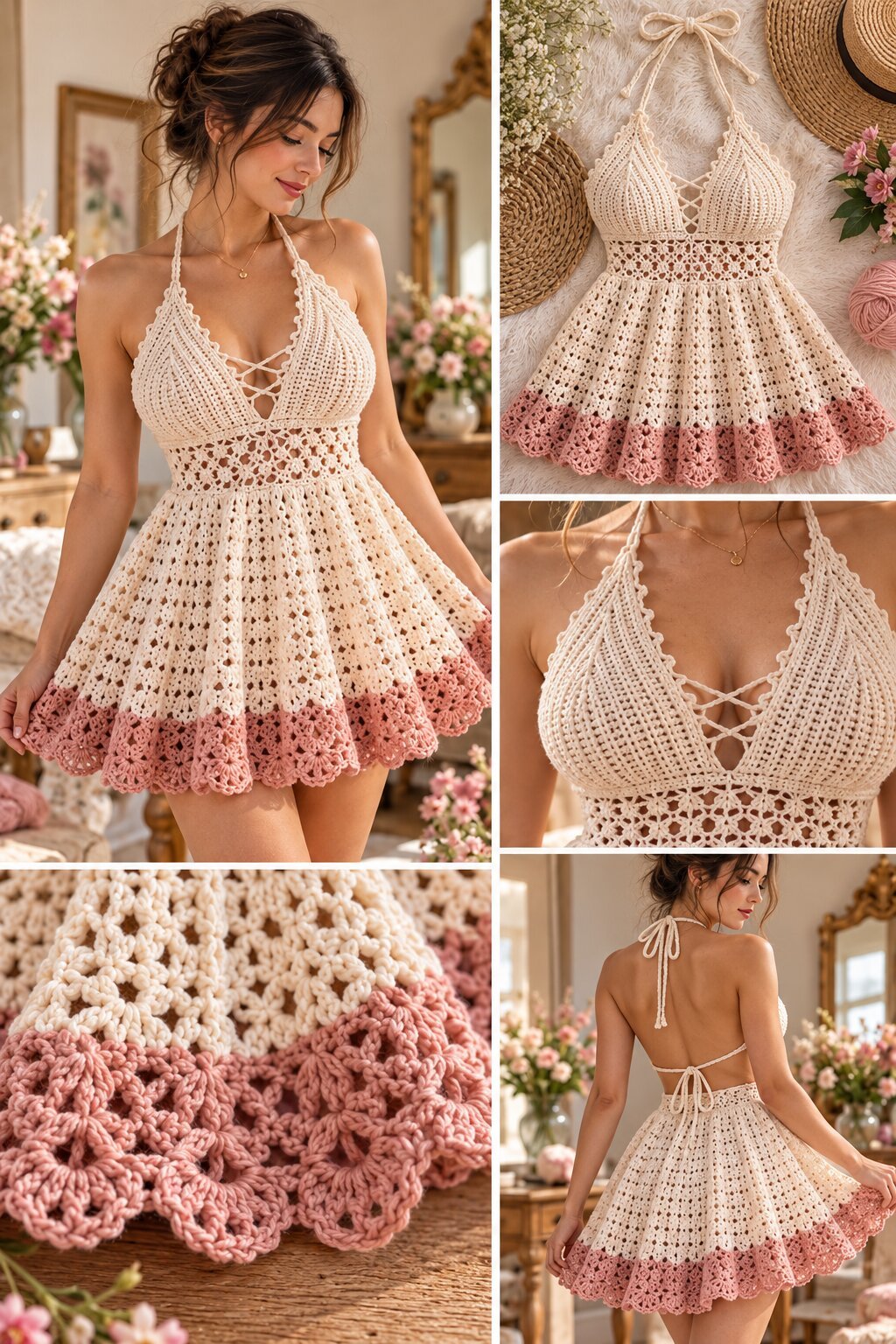
A cream halter mini dress with a deep V neckline, ribbed triangle cups, and a criss-cross lacing detail at the center front. Below the cups sits a band of open star-shaped mesh, and from there the skirt flares out in a lacy cluster stitch, ending in a deep dusty-rose border worked in a fuller, scalloped shell pattern. The halter ties knot at the back of the neck, and a second set of ties closes the open back at the waist.
The color change is the whole contrast. Everything above the hem is cream, so the rose border reads as one clean band, and the texture shifts there too: the cream skirt is airy and gapped, while the rose edge is denser and more sculptural. It looks like a different stitch pattern rather than just a different color.
This suits someone who has crocheted a bralette or a simple lace skirt and wants to join the two into one garment. The pieces are not hard individually, but fit at the bust and a smooth flare below the waist both need attention.
Reading the Construction
The cups look like triangles with vertical ridges, which usually means rows worked in the back loop only, or a half double crochet variation, starting at the bottom edge and decreasing toward the neck. A narrow scalloped edge runs along the neckline, probably a simple picot or small shell round. The criss-cross at the center looks like chain cords laced through gaps between the cups, though it could also be crocheted in place as crossing chains.
The waist band is an open mesh of small star-like clusters. That band is where the dress changes character, from fitted and dense above to loose and lacy below, and it likely does the work of letting the bodice stretch a little before the skirt begins.
The skirt fabric is a cluster stitch with visible open gaps, and the vertical lines that fan toward the hem suggest it was worked from the waist down with increases spaced evenly. The border is probably a round or two of large shells or fans, added in the contrast color.
Materials You’ll Need
- Cream yarn for the bodice and skirt (a cotton or cotton blend is a reasonable suggestion, since it holds the cups’ shape and keeps the lace crisp)
- Dusty rose yarn for the hem border
- A crochet hook sized to your yarn (see below)
- Yarn needle for weaving in ends and, if you lace the front, threading the cord
- Scissors
- Stitch markers, helpful for spacing skirt increases
- A tape measure, since fit depends on your own measurements
Yarn and Hook Notes
The fabric looks fine to medium in weight, so a DK weight cotton is a sensible starting point, with a hook roughly in the 3mm to 4mm range. A slightly smaller hook for the cups will keep them from stretching under their own weight, and a slightly larger one for the skirt lets the clusters open up. Swatch both stitches before you commit, and block the swatches before measuring gauge.
Use the same yarn weight for the border as the body so the color change does not alter the drape. A noticeably thicker rose yarn would make the hem sag.
Skill Level
Intermediate. The cluster skirt is repetitive and forgiving. The challenge comes from fitting the cups to the bust, building the open mesh band at the waist, and keeping the skirt’s increases even so the flare hangs without leaning. The border shells are a step up from a simple edging but follow the same rhythm as the rest of the lace.
Stitches Likely Involved
- Chain (ch): foundation rows, mesh spaces, ties, and the lacing cord
- Slip stitch (sl st): joining and edging
- Single crochet (sc): cups and edging
- Half double crochet (hdc) and double crochet (dc): the cluster skirt and mesh band
- Back loop only (BLO): a common way to create vertical ridges in the cups
- Cluster, shell, or fan stitch: the skirt and the scalloped border
- Picot: the neckline trim
- Increase (inc) and decrease (dec): shaping the cups and flaring the skirt
Building It: A Practical Sequence
Make the cups first. Work two triangles from the bottom edge up, decreasing toward the neck, and hold them against your bust measurement before going further.
Add the neckline trim and halter cords. Work a small scalloped edge up the sides and extend each top point into a long cord.
Join the cups with the lacing detail. Thread or crochet the crossing cords at the center front, leaving enough give to adjust the fit.
Work the open mesh band along the bottom of the bodice, sized to sit comfortably at the ribs.
Start the skirt at the waist. Increase evenly, using markers, and continue in the cluster stitch to your chosen length.
Switch to rose for the border. Work the shell or fan round or rounds in a denser stitch, which builds the heavier hem seen in the photos.
Add the back ties and weave in ends. The waist ties close the open back, so make them long enough to knot comfortably. Block the skirt flat to open the lace and straighten the scallops.
Adjusting the Fit and Look
Bust fit comes from your own measurements and a gauge swatch, and the lacing at the center gives some forgiveness. Skirt length is easy to change by adding or skipping rounds before the border. For a closed back, extend the bodice upward or add a simple button closure.
The color pairing is flexible. Cream and sage, white and lavender, or a single solid color would all keep the construction the same. For a quicker version, skip the border color change and finish the hem with a plain shell round in cream.
Where It’s Easy to Go Wrong
Cups that gape or sag. Check fit before joining, and consider a smaller hook if they stretch.
Skirt increases that drift. The flare will lean to one side. Mark the increase points at the start of each round.
Border that is too heavy for the skirt. If the rose section is worked tighter or in thicker yarn, it will pull the hem down. Swatch the transition.
Lacing that is too tight. The center can pucker if the cords have no give. Leave a little slack.
Skipping blocking. Lace looks scrunched off the hook. Pinning the skirt out lets the clusters and scallops show.
Care
Hand wash in cool water and lay flat to dry, reshaping while damp. Avoid hanging it wet, since the weight can stretch the skirt. Keep away from high heat, and follow the yarn label.
Common Questions
Is this a good beginner project?
It suits an experienced beginner or intermediate crocheter. The bust fitting and the border shells are the harder parts.
Do I need to lace the front?
No. The cups can be joined plainly, though the criss-cross is a big part of the look.
Can I use a different color for the border?
Yes. Any contrast shade works, as long as the yarn weight matches the body.
What if I want a longer dress?
Add more rounds to the skirt before the border. The cluster stitch scales easily.